https://pagead2.googlesyndication.com/pagead/js/adsbygoogle.js?client=ca-pub-9741920406541753 <!-- cup coffee --> <ins class="adsbygoogle" style="display:block" data-ad-client="ca-pub-9741920406541753" data-ad-slot="6300533788" data-ad-format="auto" data-full-width-responsive="true"></ins> <script> (adsbygoogle = window.adsbygoogle || []).push({}); </script>
Table of contents:
1.Introduction
2.What are importance of phospholipids?
3.What are importance of proteins in making cell membrane?
4.What are roles of carbohydrates in cell membrane synthesis?
5.Give the functions of cell membrane?
6.What is the cell membrane’s permeability role?
7.What are the roles of cell signaling in cell membrane?
8.What are the roles of transport materials in cell membrane?
9.What is the role of cell adhesion?
10.What are the roles of protections and supports for cell membrane?
11.Conclusion
Introduction:
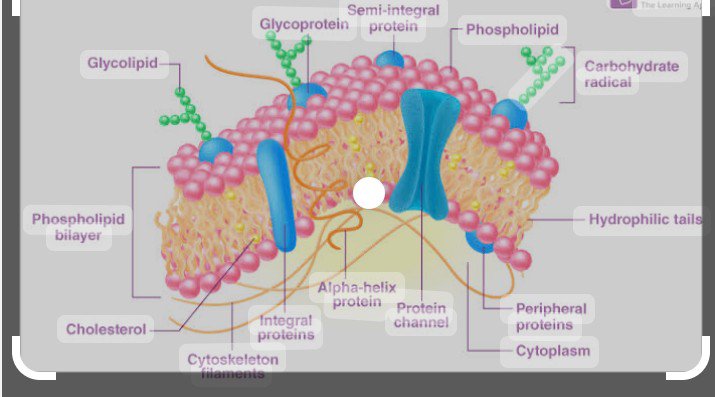
Structure: The cell membrane has a phospholipid bilayer structure, meaning it consists of two layers of phospholipids arranged with their hydrophilic (water-loving) heads facing outward and their hydrophobic (water-fearing) tails facing the inward. This arrangement forms a barrier that separates the inside of the cell from the outer environment.
What are importance of phospholipids?
Phospholipids: Phospholipids are the main structural part of the cell membrane. Each phospholipid molecules have a hydrophilic head, which contains a phosphate group, and two hydrophobic tails, which consist of fatty acid chains. The hydrophilic heads are attracted to water, while the hydrophobic tails repel the water facing inward.
What are importance of protein in making cell membrane?
Proteins: Embedded within the phospholipid bilayer are the various types of proteins. These proteins perform a range of functions, including transporting small molecules across the membrane, acting as receptors for chemical signals, and giving structural support. Some proteins span the entire membrane (integral proteins), while others are found on either the inner surface or outer surface (peripheral proteins).
What are roles of carbohydrates in cell membrane synthesis?
Carbohydrates: Carbohydrates are present on the outer surface of the cell membrane, attached to the proteins or lipids. These carbohydrate’s chains while attaching proteins on lipids, known as glycoproteins or glycolipids respectively, play a role in cell recognition and cell-cell communication. They can act as markers to distinguish different cell types and are involved in various cellular processes and activities.
Give the functions of cell membrane?
Functions: The cell membrane has several important functions:Selective permeability: The membrane is selectively permeable, allowing some substances and small molecules to pass through while restricting others.The Cell membrane regulates the entry and exit of ions, nutrients, and waste products to maintain the cell’s internal environment.
What is the cell membrane’s permeability role?
Selective permeability: The membrane is selectively permeable, allowing some substances and small molecules to pass through while restricting others.The Cell membrane regulates the entry and exit of ions, nutrients, and waste products to maintain the cell’s internal environment.Cell signaling: Proteins embedded in the membrane act as receptors, receiving signals from outside the cell and transmitting them to the cell’s interior, initiating various cellular processes and responses.
What are the roles of cell signaling in cell membrane?
Cell signaling: Proteins embedded in the membrane act as receptors, receiving signals from outside the cell and transmitting them to the cell’s interior, initiating various cellular processes and responses.
What are the roles of tranport materials in cell membrane?
Transport: Integral proteins facilitate the transport of specific small molecules across the membrane. This involves active transport (requiring energy) and passive transport (not requiring energy), such as diffusion and facilitated diffusion.
What is the role of cell adhesion?
Cell adhesion: The cell membrane plays an important role in cell adhesion, allowing cells to bind to each other and form tissues. This plays crucial role in maintaining the integrity of multicellular organisms.Protection and support: The cell membrane provides a protective barrier, shielding the cell’s internal environment from potentially harmful substances in the external environment. It also gives structural support and protection to the cell.
What are roles of protection and support for cell membrane?
Protection and support: The cell membrane provides a protective barrier, shielding the cell’s internal environment from potentially harmful substances in the external environment. It also gives structural support and protection to the cell.
Conclusion:
Overall, the cell membrane has a dynamic structure and function that allows cells to interact with their surroundings, maintain homeostasis, and carry out essential functions for life.
https://pagead2.googlesyndication.com/pagead/js/adsbygoogle.js?client=ca-pub-9741920406541753
 Learning the sciences with new angle.